Delivering 1-to-1 Experiences Without a Huge Marketing Team
The Shift Toward Individualized Digital Experiences in 2026
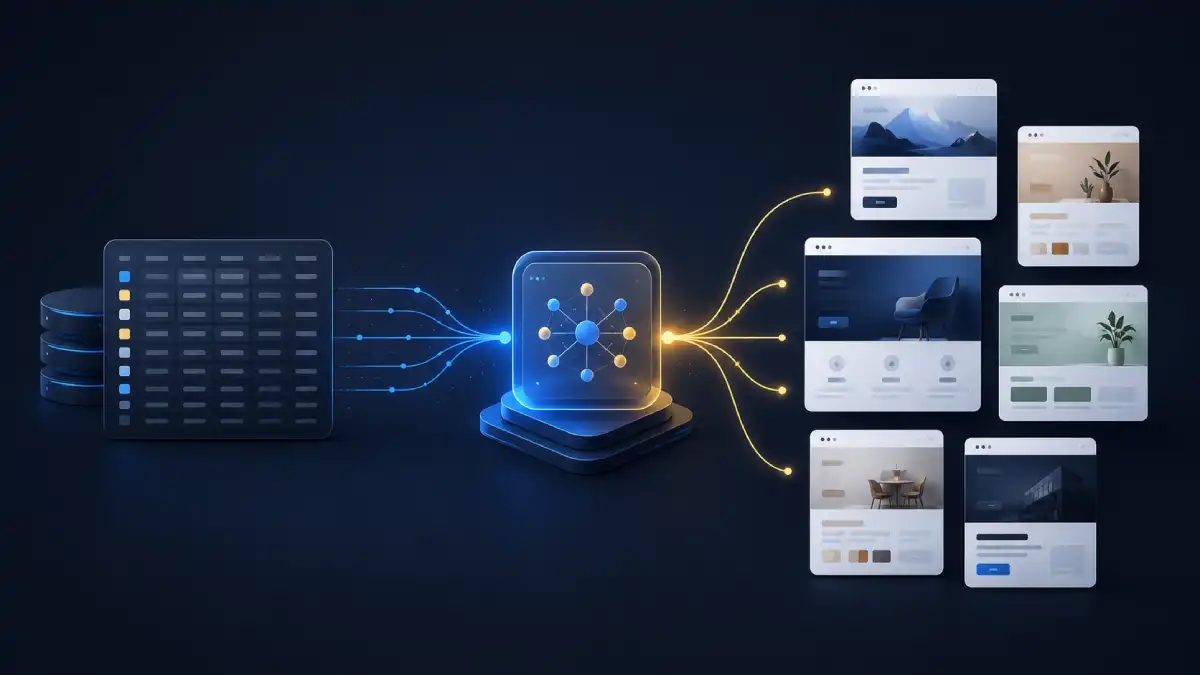
Mass marketing has actually undergone a fundamental modification. By mid-2026, the conventional method of grouping consumers into broad demographic segments-- such as age varieties or geographical zip codes-- has become mostly outdated. Rather, services now utilize generative designs to produce distinct digital environments for every single single visitor. This transition to individual-level content generation marks a period where the internet efficiently rebuilds itself around the particular needs, state of minds, and historic preferences of the person browsing.The innovation driving this modification includes more than just simple item suggestions. In 2026, generative AI systems assemble whole sites, video advertisements, and item descriptions in genuine time. When a user in a metropolitan area opens a shopping app, the interface they see is not a static design template. The color palette, the tone of the composed copy, and even the background music are synthesized on the fly to match that particular individual's cognitive profile. This level of personalization has moved from being a high-end function to a standard requirement for preserving market share.
How Local Markets in Regional Centers Adapt to AI Modification
Regional variations still matter, but they are now processed through the lens of private context. In the local market, businesses are finding that generic local ads no longer record attention. Instead, AI systems take regional data-- weather patterns, regional occasions, or local slang-- and blend it with the user's personal information. This leads to advertisements that feel deeply personal while remaining pertinent to the instant environments in the surrounding region. Success in this environment depends on the quality of the underlying information. Business are moving away from third-party cookies, which were phased out years earlier, and are now concentrating on zero-party data. This is info that clients voluntarily offer in exchange for a much better experience. For instance, a homeowner in nearby suburbs may share their particular physical fitness objectives or dietary restrictions, allowing an AI to produce a totally custom meal strategy and shopping list that updates daily based upon what remains in stock at local shops.
The Technical Pillars of Artificial Customization
Achieving this level of scale requires a complex plan of innovations operating in show. At the core are multimodal big language models that can process text, images, and video concurrently. These models do not simply "search" for content; they create it. If a customer needs to see how a furniture piece searches in a room with particular lighting, the AI creates that image in milliseconds.Efficiency has actually become the main focus for technical groups in 2026. Generating custom content for countless users at the same time is computationally costly. To manage this, numerous firms utilize a tiered technique to processing. Little, specific models handle fast interactions, while larger, more capable models are scheduled for complex creative jobs. This balance ensures that the user experience stays fast, preventing the latency that frequently afflicted earlier versions of AI-driven tools. Businesses searching for specialized help frequently look for out Asia Virtual Solutions Promotion to refine these internal procedures.
Customer Expectations and the New Standard of Relevance
By 2026, the "remarkable valley" of AI-generated content has mostly been crossed. Consumers have actually ended up being accustomed to connecting with artificial media that is equivalent from human-created material. Due to the fact that of this, their tolerance for unimportant information has actually hit an all-time low. If an e-mail or a notice does not right away resolve an existing requirement or a particular interest, it is ignored or flagged as spam.This shift has altered the role of the innovative expert. Writers and designers no longer spend their time making thousands of variations of a single banner ad. Rather, they serve as "model guvs" or "creative directors" for the AI. They set the brand name voice, develop the ethical boundaries, and specify the aesthetic rules that the generative system need to follow. The AI then carries out the millions of specific iterations needed to please a worldwide audience. The dependence on Asia Virtual Solutions Promotion helps bridge the gap between high-level brand name technique and the granular execution carried out by autonomous systems.
Privacy and Ethics in an Age of Hyper-Relevance
As personalization ends up being more intrusive, the discussion around data privacy has heightened. In 2026, transparency is a competitive advantage. Users are more likely to engage with brand names that clearly explain how their information is being utilized to enhance the experience. Numerous platforms now include "identity toggles," permitting users to see exactly what the AI learns about them and to adjust their "persona" in genuine time.In regional markets, regulative bodies have presented stricter standards on how synthetic media can be used. There is a growing requirement to disclose when a video or a voice is AI-generated, specifically in delicate sectors like finance or health care. Ethical AI implementation includes making sure that the designs do not inadvertently get predispositions that might result in unjust treatment or the exclusion of particular groups. Business that stop working to keep track of these biases deal with considerable reputational dangers.
The Economic Impact of AI-Driven Market Supremacy
The business winning in 2026 are those that have actually successfully incorporated AI into their core operations rather than treating it as a bolt-on marketing tool. The expense of customer acquisition has dropped for those who can use AI to predict precisely when an individual is prepared to buy. Alternatively, the cost of "thinking" has ended up being excessively high. Organizations that still rely on traditional, non-dynamic campaigns find themselves evaluated of the marketplace by competitors who can convert leads with much higher precision.This economic truth has led to a debt consolidation in many industries. Smaller sized companies in local areas often discover it hard to develop their own custom designs from scratch. Instead, they sign up for specialized AI platforms that supply the essential infrastructure. This "personalization-as-a-service" model enables even a small store in the regional area to provide a digital experience that matches that of an international corporation.
Real-Time Adaptation and the Death of the Project
In the past, marketing was defined by "projects"-- particular bursts of activity with a start and end date. In 2026, the concept of a project is fading. Marketing is now a constant, fluid process of real-time adaptation. The AI keeps track of user habits every second, changing the message as the user moves through their day. If a person is searching for hiking equipment while it is drizzling outside, the AI highlights water resistant functions and indoor training tips.This continuous feedback loop implies that items themselves are developing much faster. AI systems examine which customized functions are most popular and feed that data back to item advancement groups. This develops a cycle where the marketing of the item and the design of the product become a single, unified process. The outcome is a market that moves at the speed of idea, where the space in between a consumer's desire and the fulfillment of that desire is narrower than ever before.
The Role of Human Oversight in 2026
Regardless of the autonomy of these systems, human judgment stays a vital element of the process. AI can enhance for clicks or conversions, but it can not always comprehend the long-lasting psychological impact of a brand interaction. Human beings are accountable for the "soul" of the brand, guaranteeing that the machine-generated material aligns with much deeper worths that resonate on a human level.In 2026, the most effective workers are those who can successfully trigger and assist AI systems. This requires a mix of technical literacy and conventional innovative abilities. Whether in neighboring regions, the labor force is moving towards these hybrid roles. Education and training now stress how to work together with artificial entities, concentrating on the strategic decisions that the AI is not yet geared up to make. This partnership in between human instinct and machine performance is what specifies the most dominant players in the existing market.
Looking Ahead: The Persistence of Change
As 2026 advances, the borders in between the physical and digital worlds continue to blur. Increased truth (AR) glasses and wise environments now use the exact same generative AI engines to individualize the real world. An individual strolling through a shopping district in any major center might see personalized digital signs through their AR lenses that no one else sees. This represents the last of personalization: the overall personalization of the individual's viewed reality.The business that mastered digital customization years ago are the ones now blazing a trail into these physical applications. By building the facilities for scale now, they have ensured their dominance for the foreseeable future. The internet is no longer a location we "go to"; it is an individualized layer of information that exists over everything we do, powered by an invisible engine of generative intelligence that understands us much better than we may comprehend ourselves.